Invasive Species Treatment Information
Northwest Michigan Invasive Species Network protects our region through terrestrial invasive plant management.
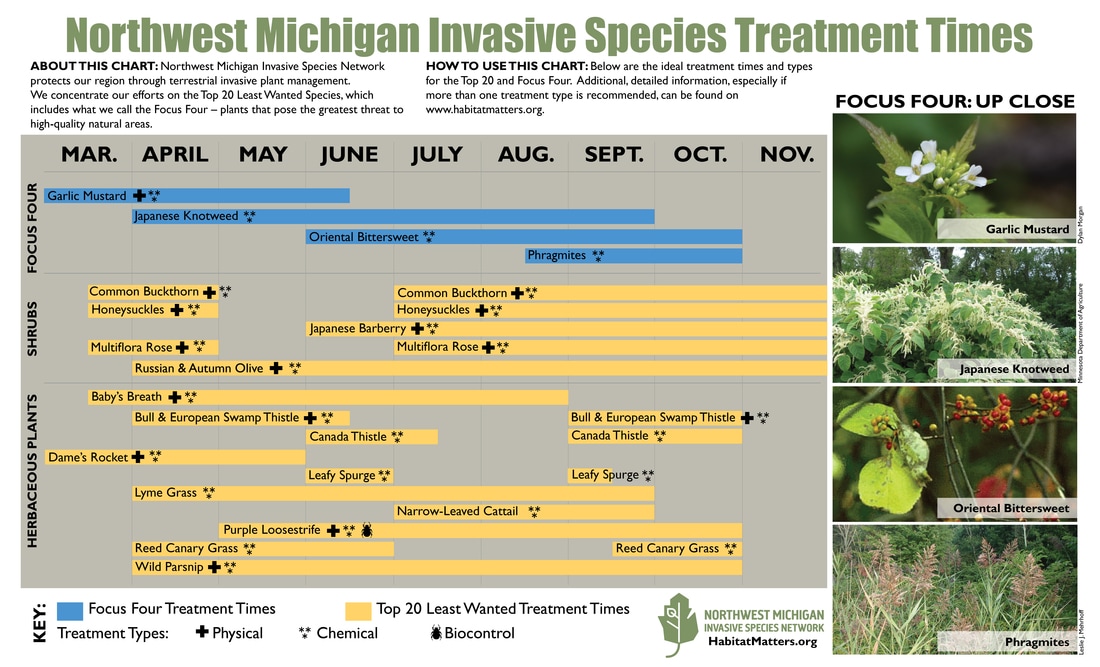
We concentrate our efforts on the Top 20 Least Wanted Species, which includes what we call the Focus Four – plants that pose the greatest threat to high-quality natural areas. Below are the ideal treatment times and types for the Top 20 and Focus Four in northwest lower Michigan--timing may be different in other areas.
You can download a printable version here. Please note this will best print on legal paper (sized 8.5 inches by 14 inches).
For more specific treatment information, contact us, use the MIPN Control Database, and check out the Top 20 & Focus Four pages.
We concentrate our efforts on the Top 20 Least Wanted Species, which includes what we call the Focus Four – plants that pose the greatest threat to high-quality natural areas. Below are the ideal treatment times and types for the Top 20 and Focus Four in northwest lower Michigan--timing may be different in other areas.
You can download a printable version here. Please note this will best print on legal paper (sized 8.5 inches by 14 inches).
For more specific treatment information, contact us, use the MIPN Control Database, and check out the Top 20 & Focus Four pages.
If you would like information on having terrestrial invasive species treated on your property, please email our Habitat Management Specialist. We focus treatments on garlic mustard, black and pale swallow-wort, baby's breath, knotweeds, bittersweet, and invasive phragmites. From there we can discuss treatment options, setting up a site visit to estimate the time and cost needed for treatment, cost-share options, scheduling treatments, and obtaining permission to enter & treat your property.